How to flash SPACE_02
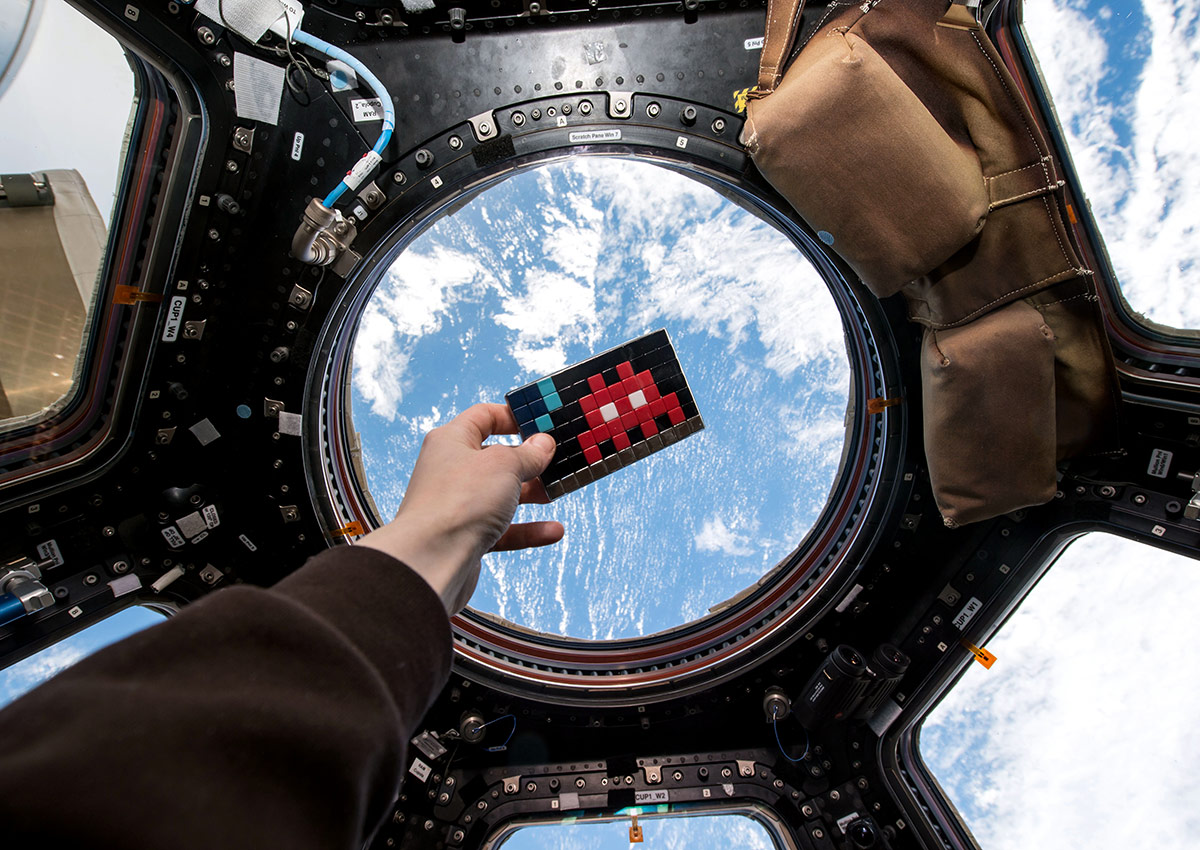
SPACE_02 the ISS invader
History:
On August 20, 2012, Invader decided to send a Space Invader into its natural environment: space. He attached it to a weather balloon, which reached the stratosphere before falling back to Earth. He made a film about it, which he presented at festivals such as FILAL in Perpignan and Lo Schemo dell'Arte in Florence, as well as during special screenings in Miami, Brussels, Paris, London, New York, and Tokyo.
Among those who saw his film was Hugo Simões, an employee of the ESA (European Space Agency). He contacted Invader and proposed sending a mosaic of his to the ISS.
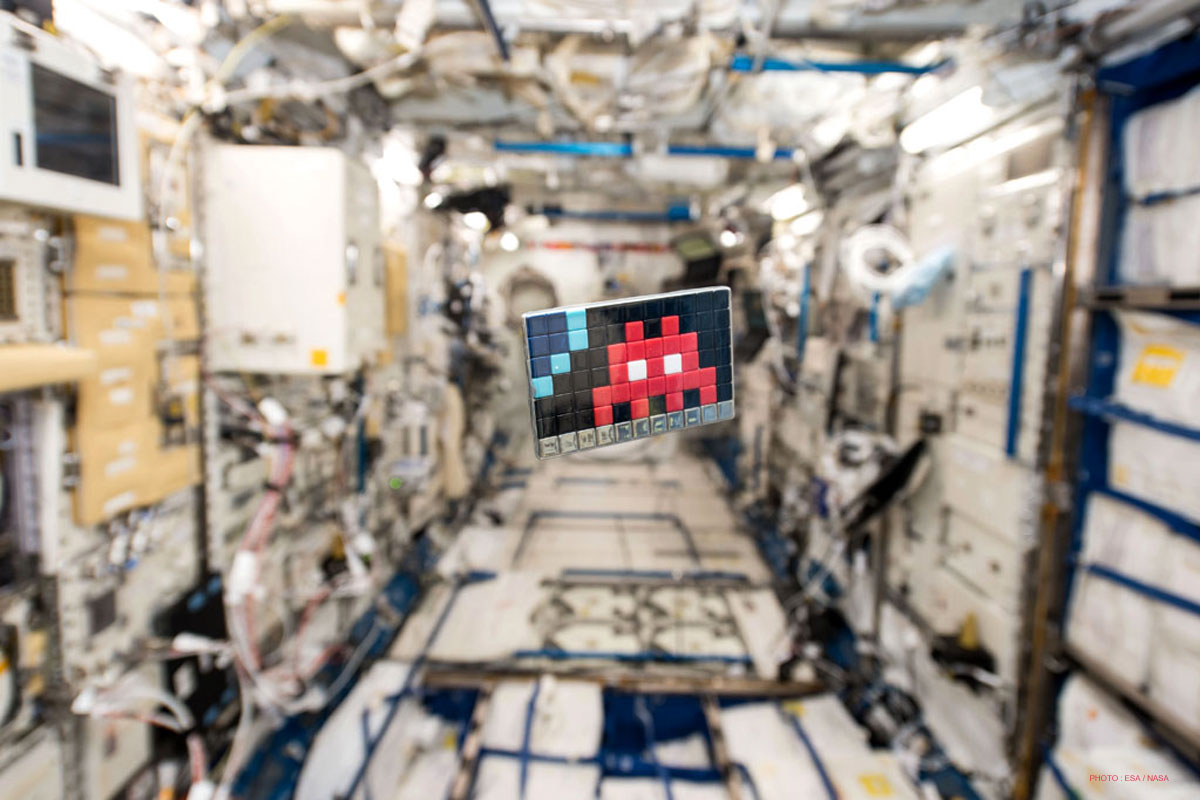
Launched into space by the Ariane 5 rocket aboard ATV No. 5 (Automated Transfer Vehicle), it reached the ISS on August 12, 2014. On March 12, 2015, it was finally installed by Italian astronaut Samantha Cristoforetti in the Columbus module. According to the ESA, however, it may have been installed as early as January 2015. It thus became the first work of art placed in space.
On December 12, 2020, on his Instagram account @invaderwashere, Invader announced that it was possible to flash the ISS...
Fun facts:
- The Space Invader is covered in plastic because it must comply with the ESA's strict hygiene standards.
- This Space Invader is one of the few to have an exact replica of itself: KLN_27, placed on the replica of the Columbus module in Cologne, at one of the European astronaut training centers.
- This Space Invader never appears in the live feed, just like PA_1450 or the submerged Space Invaders in Cancún.
Tutorial: Flashing SPACE_02
- Wait for the ISS to pass over your location with an elevation of at least 80°.
Use the tool below and the real-time map for this.
The tool gives an approximate time for the ISS pass (within about 5 minutes). The map shows the ISS's live position. - Disable "Lock screen orientation" or enable "Auto-rotate" depending on your phone.
- Point your phone toward the sky or ceiling while holding the screen facing downward.
- The ISS can still be flashed as long as it is within 200 km of you (to be confirmed).
Some phones may not be able to do this. Make sure your phone has a sensor named ROTATION VECTOR.
The ISS is worth 100 points + 100 points for a new city...